Image




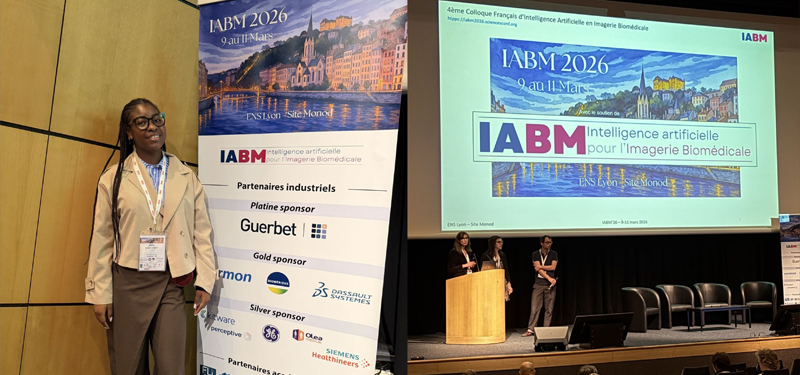
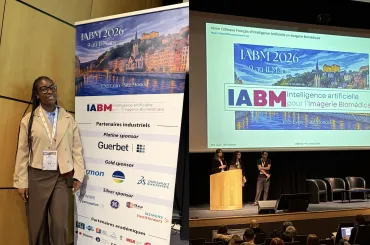
Among the papers presented is a study titled:
“Improving Diagnostic Confidence in Breast Cancer Detection through Spatial Attention and Uncertainty Modeling.”
Led by a team of students from aivancity under the supervision of Professor Anuradha Kar, this project explores how certain advanced AI techniques—including spatial attention mechanisms and uncertainty modeling—can improve the reliability of mammography classification models.
In particular, the proposed approach makes it possible to identify cases where the AI’s prediction is reliable and those requiring validation by a radiologist, thereby increasing confidence in diagnostic support systems.
Given that breast cancer remains one of the leading causes of death among women worldwide, this research demonstrates the potential of artificial intelligence to improve early detection and support healthcare professionals.
This project was carried out by a team consisting of:
• Grace-Esther Dong
• Léana A. Yemene Manfouho
• Gil-allen M. Mounzeo
• Johyce D. Bagnenda
On that occasion, Grace-Esther Dong also received a student grant from the conference in recognition of the quality and scientific potential of the work she presented.
A second research project stemming from aivancity was also accepted and presented at the conference:
“Domain-Adaptive Self-Supervision: An Eco-Efficient Pipeline for Detecting Thoracic Anomalies.”
This study focuses on the automated interpretation of chest X-rays (CXR), a key challenge for the large-scale screening of numerous lung diseases.
While the most powerful artificial intelligence models often require significant computational resources, this research proposes an approach inspired by Green AI, aimed at developing models that are lighter, faster, and more data-efficient.
The methodology is based in particular on:
• Self-supervised pre-training that enables the model to learn normal anatomical structures from healthy images
• supervised fine-tuning optimized to detect chest abnormalities, including rare pathologies Evaluated on the NIH ChestX-ray14 benchmark, the method achieves an average AUC of 0.8217, while requiring far fewer training iterations and computational resources than conventional approaches.
The research team behind this project consists of:
• Clément Frerebeau
• Marc Habib
• Sélim Jomaa
• Eve Jouni
• Bryan Fozame
• Doreid Ammar
• Anuradha Kar
Through these projects, aivancity actively encourages student research by helping its students participate in scientific conferences and supporting their academic initiatives.
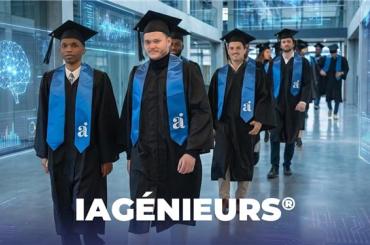
This work also reflects the school’s educational mission: to train IAgénieurs® who can develop artificial intelligence technologies while understanding their human, societal, and ethical implications.
In a tech sector still marked by disparities in representation, the successes of Grace-Esther Dong and Léana Yemene Manfouho also underscore the importance of supporting and promoting women’s roles in artificial intelligence and technology.
Because the AI of tomorrow can only be responsible, inclusive, and beneficial to society if the people who design it reflect the diversity of the real world.