


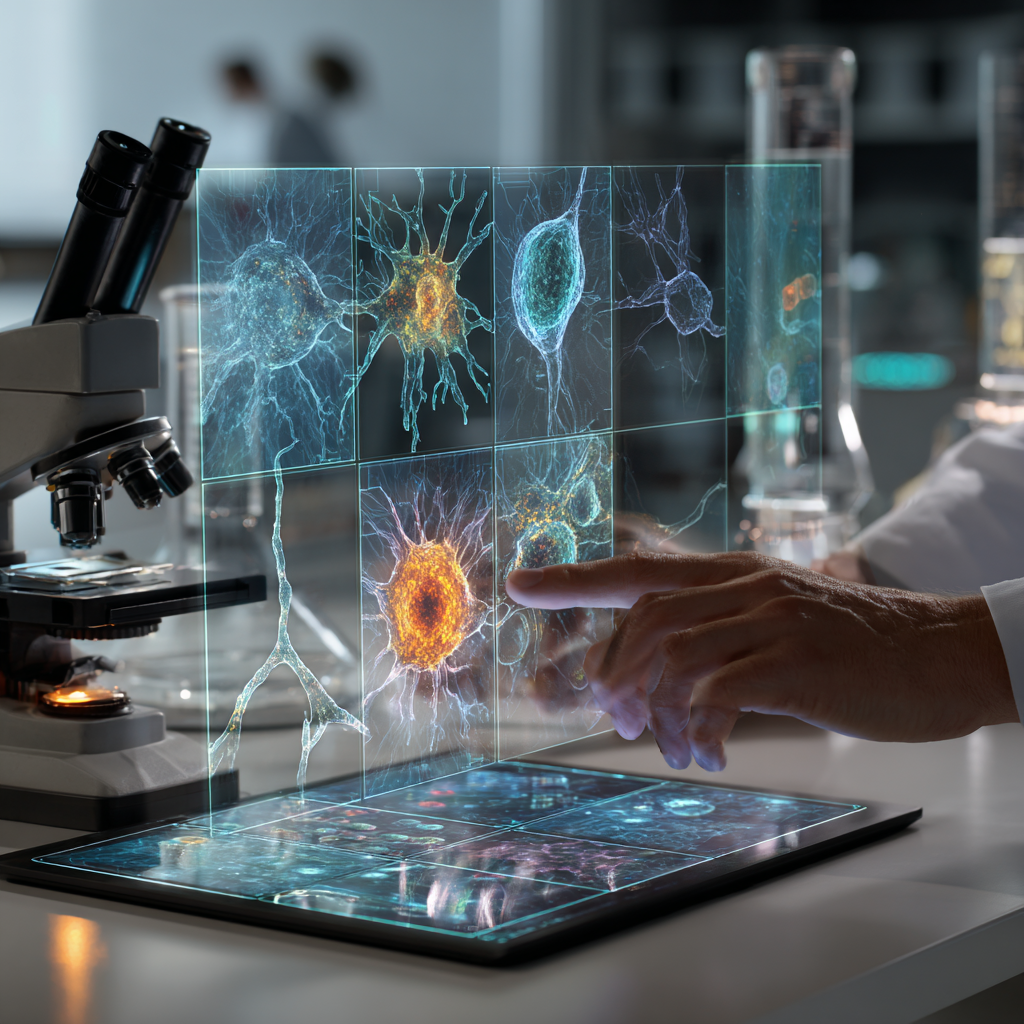
Artificial intelligence continues to revolutionize medical research. Google DeepMind, already known for its major breakthroughs with AlphaFold (which can predict the structure of over 200 million human proteins), has just announced a breakthrough in the fight against cancer. Its new artificial intelligence system has reportedly succeeded in transforming “cold” cancerous tumors— which are invisible to the immune system— into “hot” tumors, thereby triggering a targeted immune response.
According to DeepMind, this breakthrough could improve the effectiveness of immunotherapy treatments for nearly 70% of patients with treatment-resistant cancers. This discovery could redefine cancer medicine in the coming decade.
Understanding “cold” and “hot” tumors
Researchers distinguish between two main types of tumors based on their level of immune activity:
- "Hot" tumors, infiltrated by T cells, which trigger an effective immune response.
- “Cold” tumors, which lack inflammatory signals, “trick” the immune system and block the action of immune cells.
According to the National Cancer Institute, nearly three out of four cancers fall into this second category1. These “cold” tumors are often associated with aggressive cancers such as:
- pancreatic cancer (95% of which are "cold" tumors),
- colorectal cancer (78%),
- and some triple-negative breast cancers (about 60%).
These forms are particularly resistant to immunotherapy, a treatment that stimulates the body’s natural defenses. DeepMind’s scientific challenge was therefore to understand how to “reactivate” these dormant tumors to make them visible to the immune system.
A breakthrough driven by protein science
This breakthrough stems directly from the work conducted on AlphaFold, the DeepMind model that revolutionized molecular biology in 2021. Thanks to it, researchers now have a map that is more than 98% accurate of human proteins and their cellular interactions.
DeepMind used this data to train a new biological simulation model called AlphaImmuno, combining:
- molecular databases from 25 research centers,
- the immunological profiles of more than 400,000 tumor samples,
- and 2.3 million protein-cell combinations simulated virtually.
The AI then identified several key regulatory proteins (including PD-L1, TGF-β, and CXCL9) involved in suppressing the immune response. By targeting these “molecular switches,” it enabled immune cells to “see” the tumor again.
In preclinical tests on cell cultures, researchers observed a 4.7-fold increase in immune activation and a 62% reduction in cancer cells within 72 hours.
A breakthrough in immunotherapy
Immunotherapy is now one of the greatest hopes in cancer treatment: it has increased the 5-year survival rate by 30% for certain types of lung and skin cancer2. However, it remains ineffective for the majority of patients, as the tumor remains invisible to the immune system.
DeepMind’s innovation is a game-changer. By “heating up” tumors, the AI reactivates immune signals and enables existing treatments (such as checkpoint inhibitors) to work on cancers that were previously incurable.
In preliminary studies conducted on animal models:
- the average tumor size decreased by 54% over 28 days,
- and the natural immune response persisted for more than six months after the end of treatment.
“AI can’t cure cancer yet, but it reveals its hidden vulnerabilities,” says Dr. Andrea Rizzo, a computational immunologist at DeepMind Health. “This is the first time a machine has learned to manipulate the tumor microenvironment to activate the human immune system.”
Science accelerated by computing power
One of the most impressive aspects of this breakthrough is the speed at which it was achieved. Whereas teams of biologists would have taken years to test every possible combination of proteins, DeepMind’s AI simulated more than 320,000 molecular scenarios in less than three weeks, thanks to the computational infrastructure of Google Cloud TPU v6.
This approach marks a major milestone: biomedical research is entering the era of “discovery computing, ” where AI no longer merely analyzes data but proposes testable hypotheses.
Human researchers continue to play a vital role in validation and experimentation, but machines are becoming partners in scientific intuition.
Initial clinical trials are in the works
Building on these results, DeepMind has entered into a partnership with Cancer Research UK, the German Cancer Institute, andHôpital Saint-Louis in Paris to launch the first human clinical trials in 2026.
These trials will involve approximately 240 patients with advanced pancreatic and colorectal cancer. The objective is twofold:
- assess the biological safety of the process,
- and determine whether converting cold tumors into hot tumors improves the 12-month survival rate.
If the results are confirmed, DeepMind plans to submit its approach to the U.S. Food and Drug Administration and the European Medicines Agency by 2028.
Preliminary estimates suggest that this technology could save up to 1.4 million lives worldwide each year by making immunotherapy treatments effective for more patients.
Limitations and Ethical Issues
Like any scientific breakthrough, this innovation presents several challenges:
- Algorithm transparency: How can we ensure that AI’s reasoning is understood in a life-or-death medical context?
- Intellectual Property: Should discoveries made by AI be considered human inventions?
- Equitable access: Will these treatments be available in low-income countries, or will they be reserved for the most advanced healthcare systems?
DeepMind has stated that the research models used in this study will be published as open access, to enable other laboratories to continue their scientific exploration. This approach is in line with the principles of open science and ethical medicine, which are also advocated by the WHO.
A major step toward augmented medicine
This discovery highlights the growing potential of artificial intelligence in medicine. After helping to predict molecular structures, diagnose rare diseases, and identify new drugs, AI is now becoming a therapeutic tool in its own right.
DeepMind does not seek to replace doctors or researchers, but rather to push the boundaries of what human biology can explore on its own. The combination of predictive computing, systems biology, and medical ethics could define augmented medicine in the 2030s.
Learn more
Explore another medical breakthrough related to artificial intelligence in the article Delphi-2M: AI Capable of Detecting 1,000 Diseases Years Before They Appear. This supplementary reading demonstrates how the same logic of detection and anticipation applies to medical prevention, long before symptoms appear.
References
1. National Cancer Institute. (2025). Tumor Immunity and Microenvironment Studies.
https://www.cancer.gov
2. World Health Organization. (2025). Global Cancer Observatory Report.
https://www.who.int