


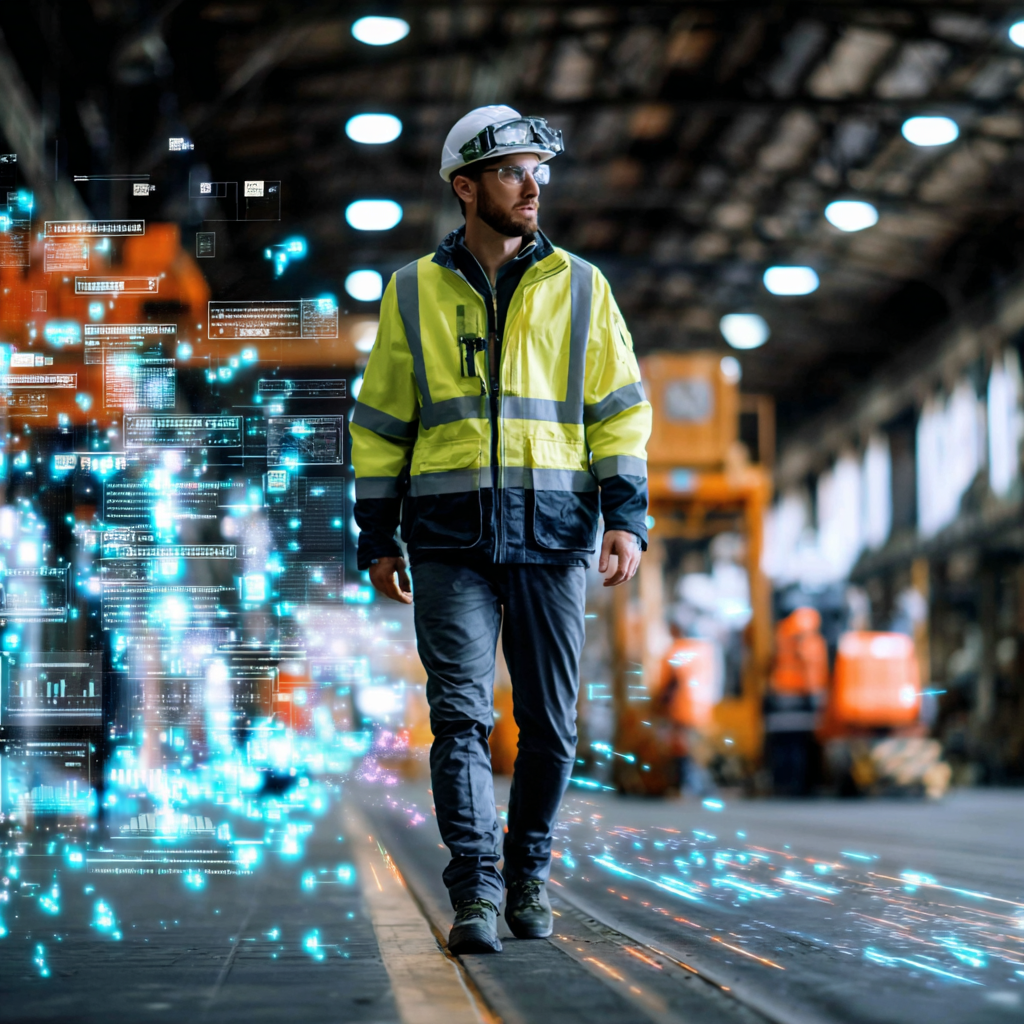
For a long time, the supply chain was viewed as primarily an operational function, focused on cost optimization, inventory management, and the smooth flow of goods. The supply chain manager was responsible for ensuring that the right products arrived at the right place, at the right time, at the lowest possible cost. But this perspective has undergone a profound transformation in recent years.
A global pandemic, component shortages, port congestion, geopolitical tensions, rising logistics costs, and stricter environmental requirements have highlighted the fragility of globalized supply chains. According to the World Economic Forum, more than 75% of companies experienced at least one major supply chain disruption between 2020 and2023¹. Business continuity has become a strategic priority.
In this context, complexity is skyrocketing. A global supply chain can involve hundreds of suppliers spread across multiple continents, all of whom are subject to unpredictable factors such as weather, regulations, or international tensions. At the same time, the volume of logistics data generated by ERP systems, IoT sensors, and transportation platforms has increased by more than 40% in three years².
The figures illustrate this shift:
- Companies that integrate AI into their supply chains improve their service levels by 20 to30%³.
- The global market for AI applied to the supply chain is projected to exceed $20 billion by2030⁴.
- Nearly 50% of supply chain jobs will require advanced data and AI skills by2030⁶.
The industry is thus entering a new era. It is no longer just a matter of optimizing workflows, but of securing a complex, interconnected system that is vulnerable to disruptions.
How AI Is Transforming Strategic Supply Chain Management
Artificial intelligence is now becoming an integral part of every stage of the supply chain. It is transforming the way we forecast, plan, and respond to unforeseen events.
- Enhanced demand forecasting: Machine learning models analyze historical sales data , macroeconomic data, consumer trends, weather patterns, and weak market signals. According to Gartner, these approaches can improve the accuracy of demand forecasts by up to50%⁵, thereby reducing stockouts and overstocking.
- Dynamic planning and scenario analysis: AI enables the simulation of complex scenarios—such as a port closure, the failure of a key supplier, or a sudden spike in transportation costs—and measures their impact across the entire supply chain. These simulations enhance the ability to anticipate issues and improve the quality of decision-making.
- Smart inventory management: By adjusting inventory levels based on forecasted demand, supplier lead times, and logistical constraints, some companies have reduced their safety stock by 15 to 25 percent without compromisingservice levels³.
- Real-time traceability and visibility: IoT sensors and predictive analytics platforms provide continuous visibility into supply chains. Delays, incidents, or potential disruptions are detected earlier, allowing contingency plans to be activated before a crisis occurs.
- Supplier Risk Management: AI analyzes thousands of open-source data points (news, financial data, geopolitical indicators) to assess supplier stability and identify emerging risks, going far beyond traditional audits.
These practices are fundamentally transforming decision-making. The supply chain is becoming less reactive and more proactive, but also more dependent on the quality of the data and on people’s ability to interpret it.
Supply Chain and Robotics: The Warehouse Goes Smart
While AI is transforming strategic planning, robotics is revolutionizing operational execution. Modern warehouses are becoming hybrid environments where autonomous robots, computer vision systems, and optimization platforms work alongside human teams.
Amazon has deployed more than 750,000 robots in its fulfillment centers around theworld¹. These mobile robots bring shelves to workers, reducing the need for them to walk and speeding up order fulfillment. Other companies, such as Ocado and major European retailers, are developing fully automated logistics platforms.
In practical terms, intelligent robotics enables:
- To optimize internal routes and warehouse space management.
- To synchronize orders and fulfillment capacity in real time.
- To reduce picking errors.
- To improve operator safety.
According to McKinsey, intelligent warehouse automation can increase productivity by 30 to 50percent³.
This shift is redefining job roles. Operators are becoming supervisors of automated systems. Supply chain managers must incorporate robotics into their strategic framework.
Delivery Optimization: Toward Predictive and Dynamic Logistics
The transformation doesn't stop at warehouses. Transportation and delivery management are also being profoundly reshaped by AI.
With the explosive growth of e-commerce, route optimization now relies on algorithms capable of integrating the following in real time:
- Traffic conditions.
- Time constraints.
- Vehicle capacities.
- Business priorities.
According to Capgemini, algorithmic route optimization can reduce travel distances by 10 to 15 percent, while improvingon-time performance³.
Predictive platforms anticipate delays and automatically recalculate routes. Some companies are also testing autonomous vehicles and delivery robots for the last mile.
However, these advances raise a number of issues:
- Increased reliance on digital systems.
- Vulnerability to cyberattacks.
- The need for robust technology governance.
Logistics is evolving into an interconnected cyber-physical system.
A New Role for Supply Chain Professionals
In the past, the supply chain manager was primarily responsible for managing flows and operational constraints. Today, they have become the conductor of interconnected systems, at the intersection of data, strategy, and the front lines. Their role is no longer limited to executing plans, but to interpreting complex signals generated by algorithms.
In practical terms, this means:
- Balancing algorithmic recommendations with real-world constraints.
- Explain to senior management what a model predicts—and, more importantly, what it cannot predict.
- Coordinate purchasing, production, logistics, finance, and information systems around a shared vision.
Supply chain professionals thus become key players in ensuring a company’s resilience, responsible not only for operational performance but also for business continuity.
What skills are needed for supply chain roles in the age of AI?
The fundamentals of the job—understanding workflows, negotiating with suppliers, and managing deadlines—remain essential. But artificial intelligence requires a significant upgrade in skills.
- Analytical and data skills: Reading predictive dashboards, understanding probabilities, interpreting complex scenarios.
- Technical skills: Understanding the general workings of augmented ERP systems, AI tools, the Internet of Things (IoT), and supply chain visibility platforms.
- Cross-functional skills: Work closely with the data, IT, and finance teams, and translate technical analyses into operational decisions.
- Ethical and environmental competencies: Incorporating sustainability, traceability, and social responsibility considerations into logistics decisions.
According to the World Economic Forum, nearly 50% of supply chain jobs will require advanced skills in data and artificial intelligence by2030⁶.
Can artificial intelligence make the supply chain more resilient?
One of the key arguments in favor of AI is its ability to enhance the resilience of supply chains. The benefits are real:
- Early detection of risks through the analysis of weak signals.
- Real-time optimization of routes and modes of transportation.
- More effective allocation of resources during times of crisis.
But these promises also have their limitations:
- Data dependency: Incomplete or biased data can lead to poor decisions.
- Black-box effect: Some models remain difficult to explain to decision-makers and partners.
- Systemic risk: The widespread adoption of the same tools can make supply chains more homogeneous and vulnerable to global shocks.
Thus, AI does not inherently make the supply chain resilient. It enhances the ability to anticipate, provided it is guided by solid human expertise.
What will the supply chain profession look like in the future?
Supply chain professions will evolve in an environment where:
- Operational decisions will be supported by AI co-pilots.
- Crisis scenarios will be simulated on an ongoing basis.
- Collaboration between companies, suppliers, and partners will become increasingly data-driven.
New roles will emerge, such as supply chain data analyst, algorithmic risk manager, and digital traceability manager. The professional of tomorrow will be less of a mere workflow manager and more of a resilience architect, capable of orchestrating complex systems in an uncertain world.
Toward an augmented supply chain—but one that remains human
Artificial intelligence is fundamentally transforming the supply chain, but it does not change its core nature. It speeds up analysis, enhances the ability to anticipate, and informs decision-making. It shifts priorities: less reaction, more prevention; fewer silos, more interconnectivity.
Beyond the tools themselves, the challenge is both human and strategic. The value of tomorrow’s supply chain professions will not lie in the ability to blindly follow models, but in the ability to question them, contextualize them, and put them to work in the service of a more resilient and responsible economy.
What if, in an unstable world, the true strength of the augmented supply chain lay precisely in this alliance between artificial intelligence and human intelligence?
Learn more
To broaden your perspective and understand how AI is reshaping other professions—from human resources to finance, and from healthcare to communications—we invite you to explore our dedicated section “AI & Professions”, which analyzes the concrete impact of intelligent technologies on skills, practices, and the organization of work.
References
1. World Economic Forum. (2023). Global Supply Chains: From Disruption to Resilience.
https://www.weforum.org/publications/global-supply-chains-from-disruption-to-resilience
2. IBM Institute for Business Value. (2024). Data-driven supply chains in a volatile world. https://www.ibm.com/thought-leadership/institute-business-value
3. McKinsey & Company. (2023). Supply Chain 4.0: The Next-Generation Digital Supply Chain.
https://www.mckinsey.com /a>
4. MarketsandMarkets. (2024). Artificial Intelligence in the Supply Chain Market – Global Forecast to 2030.
https://www.marketsandmarkets.com
5. Gartner. (2024). How AI Improves Demand Forecasting Accuracy.
https://www.gartner.com
6. World Economic Forum. (2025). The Future of Jobs Report.
https://www.weforum.org /a>