


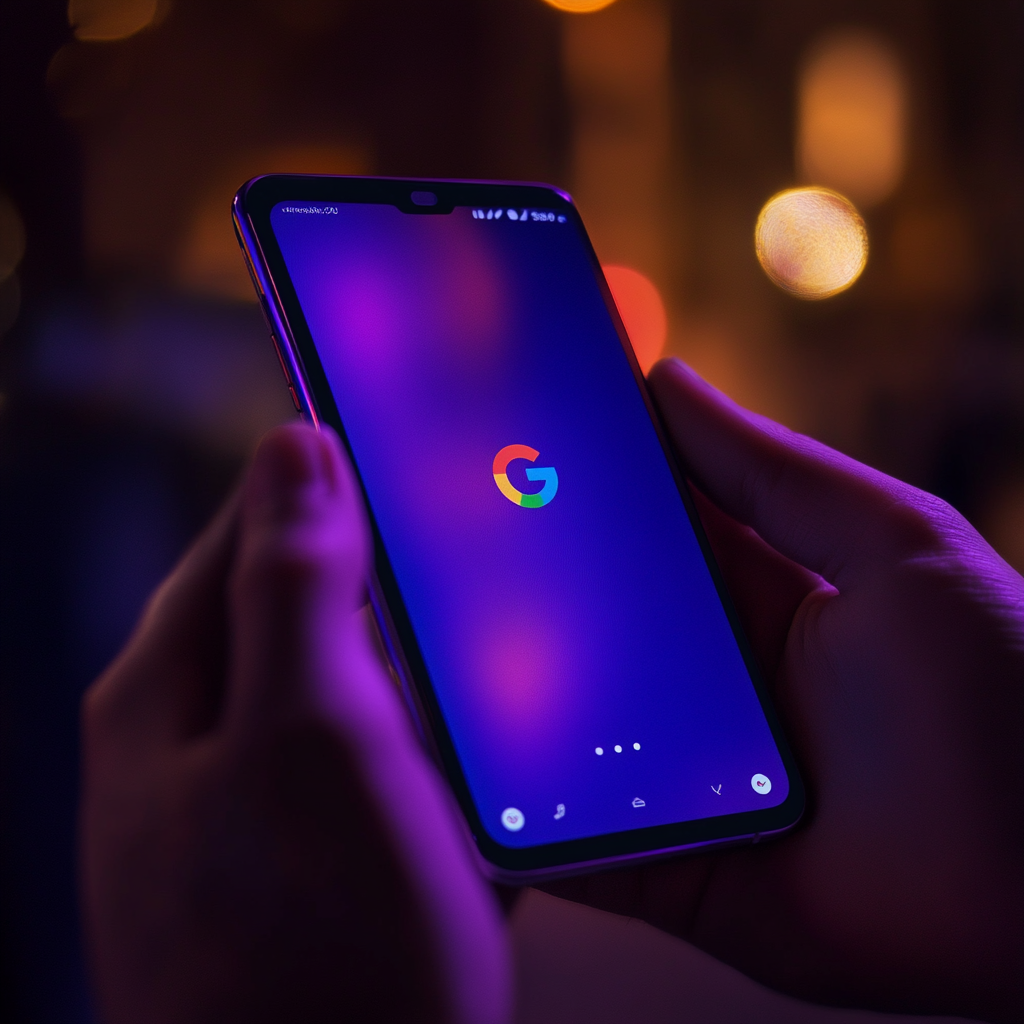
A new smart overlay for Android
What if artificial intelligence were no longer just an app, but an integral part of the interface? That’s the bet Google is making with the launchof AI Mode, a native Android feature that transforms the user experience by injecting real-time, context-aware assistance. Unveiled at the I/O 2025 conference, this innovation marks a turning point in the integration of generative AI into mobile operating systems.
AI Mode does more than just trigger voice commands. It is a software framework capable of detecting, anticipating, and addressing user needs in any application—whether that involves writing an email, summarizing a PDF document, rephrasing a message, or interacting with a YouTube video that is currently playing.
Ambient AI, always available
With AI Mode, artificial intelligence becomes a permanent feature of the Android environment. Specifically, a dedicated AI chip (Gemini Nano, on the Pixel 9 and 9 Pro) and on-device processing enable seamless assistance without relying on the cloud. This ensures speed, security, and privacy.
Key features include:
- Summarize a text or web page with a single gesture,
- Instant rephrasing or translation in any messaging app,
- Generating contextual images or illustrations in a note or creative app,
- Smart audio playback of long-form content, with personalized text-to-speech.
Google describes this as " context-aware " AI: it understands the current screen, adapts to the active app, and offers relevant suggestions or actions without requiring a switch to another window or an explicit request.
A response to changing mobile trends
According to a study conducted by Statista in April 20251, 71% of smartphone users want more proactive assistants for their daily needs. Traditional voice assistants are seen as too limited, and AI apps are often siloed.
With AI Mode, Google is launching a direct response to this need: to make AI an integrated, non-intrusive feature that doesn’t replace the user but intelligently assists them.
The market looks promising: according to IDC, the number of smartphones equipped with built-in AI processors will reach 850 million units by 20262. The battle for smart interfaces is therefore heating up between Android, iOS, and HarmonyOS.
Real-world use cases for AI Mode
Early feedback from Android Labs (Early Access) developers highlights real-world use cases:
- Augmented reading: In the Kindle app, AI provides a summary of the chapter with a single tap.
- Assisted writing: In Gmail, AI Mode rephrases a reply to match the desired tone (formal, friendly, direct, etc.).
- Quick visual creation: In Google Keep, a sketch is automatically completed using AI in a consistent style.
- Improved accessibility: On YouTube, AI Mode generates an audio summary for people with visual impairments.
A step toward a symbiotic interface
AI Mode embodies Google’s vision of an AI-enhanced operating system: an OS that understands its user, their context, and their intent, providing seamless assistance.
This approach aligns with the " pervasive AI " strategy that Google has been developing over the past two years: integrating AI not as a visible layer, but as an interface feature operating in the background to enhance the user experience.
Toward a new standard of interaction?
AI Mode is currently only available on the latest Pixel devices as a beta version. But it offers a glimpse of what the mobile experience might look like in the years to come: a seamless, efficient, and unobtrusive dialogue between humans and machines.
In this new era, AI no longer simply responds to commands; it collaborates with the user in real time. It remains to be seen how competitors—from Apple to Samsung—will also integrate these smart assistants into the background.
References
1. Statista. (2025). AI Assistants Usage Survey – Mobile Expectations.
https://www.statista.com/statistics/ai-assistant-preferences
2. IDC. (2025). AI Processing Units in Smartphones – Market Outlook.
https://www.idc.com/report-ai-processors-2025